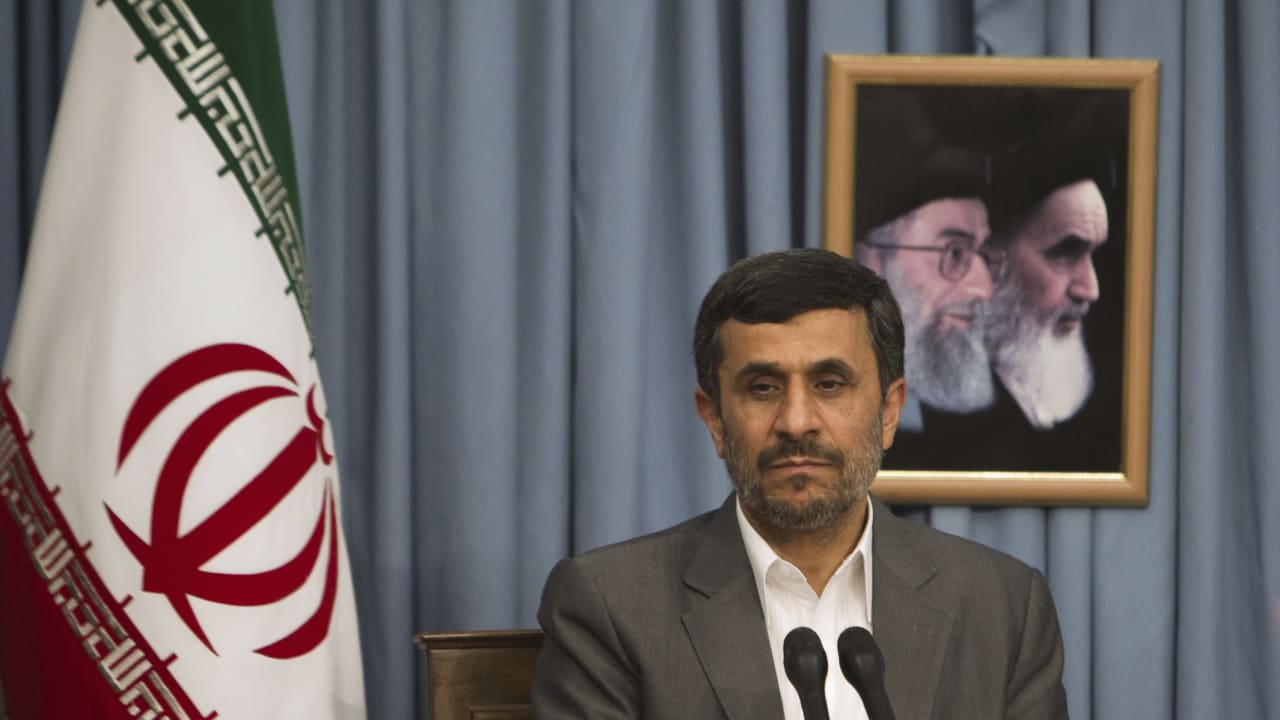
Tehran Strikes Claim Ahmadinejad: From Presidency to Targeted Hit
The geopolitical landscape of the Middle East has been shaken by reports from the Iranian Labour News Agency (ILNA) confirming the death of former Iranian President Mahmoud Ahmadinejad. He was reportedly killed during a wave of strikes that targeted Tehran, specifically his residence in the Narmak neighborhood. The news of Ahmadinejad's death linked to Israeli actions marks a dramatic end to the life of a figure who deeply polarized global opinion, known for his incendiary rhetoric against Israel and his defiant stance on Iran's nuclear program. This event, if fully confirmed, sends potent ripples through the region, underscoring the escalating tensions and the audacious reach of military operations in a highly volatile arena.
Mahmoud Ahmadinejad served as Iran's sixth president from 2005 to 2013. His tenure was characterized by a confrontational approach to international diplomacy, particularly with Western nations, and an unyielding commitment to Iran's nuclear ambitions. Beyond the strategic implications of his presidency, Ahmadinejad became an international symbol of anti-Israel sentiment and Holocaust denial, cementing a legacy that transcended typical political discourse.
The Rise of a Hardliner: From Mayor to President
Ahmadinejad's ascent to power was, for many, a significant surprise. Rising from relative obscurity as the mayor of Tehran, he managed to defeat the more established figure of Akbar Hashemi Rafsanjani in a runoff election in 2005. His victory was attributed to a populist appeal, aligning himself with the working class and promising to tackle corruption and economic disparities.
However, his political journey was not without severe internal strife. His disputed re-election in 2009 ignited the massive "Green Movement" protests, an unprecedented outpouring of public dissent that saw millions take to the streets. These demonstrations, violently suppressed by security forces including the Basij militia and elements of the Islamic Revolutionary Guard Corps (IRGC), represented one of the gravest internal crises faced by the Islamic Republic. Ahmadinejad's political base was closely aligned with these powerful security apparatuses, which played a crucial role in consolidating his power and quashing opposition.
Throughout his presidency, critics both at home and abroad frequently described him as a confrontational ideologue. His economic policies, including the ambitious Mehr housing initiative and sweeping subsidy reforms, were later blamed by many for fueling inflation and exacerbating Iran's economic woes. Internationally, his rhetoric and actions deepened Iran's isolation, leading to multiple rounds of United Nations Security Council sanctions over the country's controversial nuclear program.
A Legacy of Provocation: Anti-Israel Rhetoric and Holocaust Denial
Perhaps no aspect of Ahmadinejad's presidency garnered more international outrage than his stance on Israel and the Holocaust. He consistently denied the historical reality of the Holocaust, famously stating in 2006 that it was a "myth." In a move widely condemned globally, his government hosted a conference in Tehran that same year, which critics denounced as a platform for Holocaust denial, further cementing his controversial reputation.
His rhetoric regarding Israel was equally, if not more, inflammatory. During a 2005 conference titled "A World Without Zionism," he famously quoted Iran’s founding leader, Ayatollah Ruhollah Khomeini, who had referred to Israel as "the occupying regime of Jerusalem" and a "disgraceful cancerous growth" that "must be wiped off the map." While some of his defenders later argued that translations of his remarks were disputed, the overwhelming consensus among critics was that the intent was unmistakably hostile and genocidal in its implications. This unyielding hostility towards the Jewish state made him a figure of profound concern for regional stability and international peace.
Beyond these major controversies, Ahmadinejad also gained notoriety for other provocative statements, such as his 2007 declaration at Columbia University that there were "no homosexuals in Iran," a comment that provoked laughter from the audience and widespread ridicule. His presidency was also marked by an unusual emphasis on Shiite messianic belief in the return of the Hidden Imam, a fusion of theology and statecraft that many found disconcerting.
Internationally, Ahmadinejad forged a high-profile alliance with Venezuelan President Hugo Chávez, framing their partnership as a united front against perceived U.S. influence and Western hegemony. This alliance sought to project a vision of alternative global leadership, though its practical impact remained limited.
The Targeted Strike and Geopolitical Ripples
According to reports from ILNA and corroborating Israeli media outlets like Ma’ariv, Mahmoud Ahmadinejad was killed in a targeted strike on his residence in the Narmak neighborhood of eastern Tehran. This middle-class district became the epicenter of a strike that reportedly claimed his life alongside his security guards. Some reports even suggested he might have been under house arrest at the time of the attack, indicating a degree of political marginalization even before his death.
This event is said to have occurred during an "opening wave of coordinated US-Israeli strikes" on Tehran, part of a broader military operation. While the reference context also mentions the death of Supreme Leader Ali Khamenei in a strike on the "Leadership House" compound during the same wave, the specific targeting of Ahmadinejad's residence suggests a deliberate focus on high-value, symbolic figures within the Iranian establishment. For more details on the broader implications of these events, you can read Ahmadinejad Killed in Israeli Strikes: A Hardliner's End.
The implications of Ahmadinejad's reported demise at the hands of Israel are far-reaching. Such a high-profile assassination, if confirmed as an Israeli operation, signals an aggressive shift in regional conflict dynamics. It demonstrates an intelligence and operational capability that could profoundly impact Iran's internal security perceptions and its calculus regarding future engagements. The targeting of such a prominent, albeit increasingly marginalized, figure sends a powerful message about the resolve to counter specific elements of Iranian power and influence.
Internally, while Ahmadinejad had clashed openly with Supreme Leader Ali Khamenei in his later years and had been repeatedly barred from running for president again—signaling his marginalization within the ruling establishment—his death could still rally hardline elements or create new complexities within Iran's intricate political ecosystem. The absence of a figure synonymous with such staunch anti-Israel rhetoric might open a vacuum, or it could solidify the resolve of those who share his views.
For those observing regional geopolitics, this event underscores the perilous escalation in the Middle East. It highlights the direct and aggressive measures being taken by regional adversaries, potentially ushering in a new phase of covert and overt conflict. The international community will be closely watching for Iran's official response and how this dramatic development will shape the ongoing standoff over its nuclear program and its role in regional proxy conflicts.
What This Means for Regional Stability
- Escalated Tensions: A direct strike claiming a former president, especially one with such a history, will undoubtedly fuel an already boiling regional pot.
- Intelligence Capabilities: The precise targeting in Tehran suggests advanced intelligence gathering and operational reach, a significant concern for Iranian leadership.
- Internal Dynamics: While marginalized, Ahmadinejad still commanded a base of support. His death could either consolidate the current hardline leadership or trigger unpredictable internal reactions.
- Nuclear Program: Iran's nuclear ambitions, a central theme of Ahmadinejad's presidency, will remain a flashpoint. This strike could harden Tehran's resolve or lead to a recalibration of strategy.
- Proxy Conflicts: The event might influence the various proxy conflicts in which Iran and its adversaries are engaged across the Middle East.
The reported death of Mahmoud Ahmadinejad marks a pivotal moment, symbolizing the sharp escalation of covert operations and direct confrontation in the Middle East. His legacy, characterized by fervent anti-Israel sentiment and nuclear defiance, now culminates in a dramatic end that underscores the volatility of the region. This development is not merely the end of a controversial political figure but potentially a harbinger of further instability and profound geopolitical shifts. To understand the full scope of his divisive political journey and the implications of his demise, explore Iran's Ex-President Ahmadinejad Dead: Legacy of Anti-Israel Rhetoric.