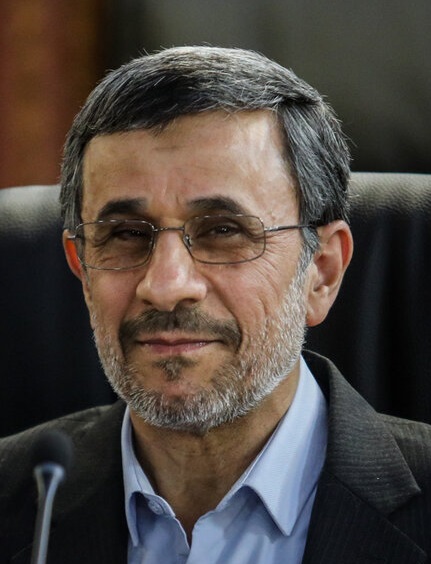
The Reported Demise of a Controversial Figure: Ahmadinejad's Legacy Under Fire
News reports emerging from Tehran on Saturday have announced the death of former Iranian President Mahmoud Ahmadinejad, allegedly killed during a wave of strikes targeting the Iranian capital. The hardline figure, whose tenure from 2005 to 2013 was defined by nuclear defiance and incendiary rhetoric against Israel and the West, reportedly perished in a strike on his residence in the Narmak neighborhood. This development, if confirmed, marks a dramatic end to a political career that repeatedly challenged international norms and left an indelible, controversial mark on global politics. The reports immediately sparked discussions about the profound implications for regional stability, particularly concerning Iran's complex relationship with Israel, a nation Ahmadinejad famously vowed to "wipe off the map." The phrase "ahmadinejad dood israël" (Ahmadinejad dead Israel) quickly encapsulates the stark juxtaposition of his passing with his most notorious political stance.
The Final Chapter: Ahmadinejad's Reported Death Amidst Tehran Strikes
The circumstances surrounding Mahmoud Ahmadinejad's reported death are as dramatic as his public life. According to reports by Iranian news agency ILNA and subsequently picked up by Israeli media outlets like Israel Hayom and Ma’ariv, Ahmadinejad was killed on Saturday during a series of coordinated strikes in Tehran. These operations, reportedly carried out by Israel, targeted various strategic locations, including the middle-class district of Narmak in east Tehran, where the former president resided. He was allegedly killed alongside his security guards, with some reports suggesting he was under house arrest at the time of the targeted strike. This alleged demise during a period of heightened regional tension underscores the volatile nature of the geopolitical landscape and brings to a sudden close the chapter of a leader whose very name became synonymous with defiance. For more insights into the specifics of this event, you might find Ahmadinejad Killed in Israeli Strikes: A Hardliner's End to be a valuable resource.
A Wider Operation: Context of the Tehran Strikes
It's important to note that the reports indicate Ahmadinejad's death was part of a larger, coordinated operation. While this article primarily focuses on Ahmadinejad, the reference context also mentions the reported death of Supreme Leader Ali Khamenei in a separate strike on the "Leadership House" compound during the same morning. This suggests the strikes were widespread, targeting multiple high-profile figures and strategic assets within Tehran. Such an extensive operation, if confirmed, signals a significant escalation in regional conflict, potentially reshaping Iran's political future and its interactions with adversaries.
A Hardliner's Era: Mahmoud Ahmadinejad's Presidency (2005-2013)
Mahmoud Ahmadinejad's eight years as Iran's sixth president were nothing short of transformative, both domestically and internationally. Rising from relative obscurity as the mayor of Tehran, he staged a surprising upset in the 2005 elections, defeating establishment figure Akbar Hashemi Rafsanjani. His political base was deeply intertwined with the Islamic Revolutionary Guard Corps (IRGC) and the Basij militia, forces that proved crucial in consolidating his power and, controversially, in suppressing dissent.
Internal Crises and Economic Challenges
His presidency was not without internal turmoil. The most significant domestic crisis was the disputed 2009 reelection, which ignited the widespread "Green Movement" protests. These mass demonstrations, challenging the legitimacy of the election results, were met with violent suppression by security forces, showcasing the regime's resolve against internal opposition. Economically, Ahmadinejad's tenure was marked by ambitious but often criticized policies. His "Mehr housing initiative" aimed to provide affordable homes, and subsidy reforms sought to redistribute wealth. However, critics, both at home and abroad, later blamed these very policies for fueling inflation and exacerbating economic mismanagement, deepening Iran's isolation under multiple rounds of UN Security Council sanctions over its nuclear program. To delve deeper into the trajectory of his political journey and its abrupt conclusion, consider reading Tehran Strikes Claim Ahmadinejad: From Presidency to Targeted Hit.
The Enduring Mark: Ahmadinejad's Anti-Israel Rhetoric and Holocaust Denial
No aspect of Mahmoud Ahmadinejad's presidency garnered more international outrage and condemnation than his relentless and inflammatory rhetoric concerning Israel and the Holocaust. His pronouncements became a defining feature of his public image, solidifying his status as a polarizing hardliner on the global stage. The news of his reported death, therefore, inevitably circles back to his most notorious declarations, truly encapsulating the idea of "ahmadinejad dood israël" for many observers.
"Wiping Israel Off the Map"
Ahmadinejad became infamous for his repeated assertions that Israel "must be wiped off the map." During a 2005 conference provocatively titled "A World Without Zionism," he quoted Iran's founding leader, Ruhollah Khomeini, who had referred to Israel as "the occupying regime of Jerusalem" and a "disgraceful cancerous growth." While his defenders later argued that translations of his remarks were disputed, the intent, according to critics, was unmistakably hostile and fueled a perception of Iran as an existential threat to the Jewish state. This rhetoric not only heightened tensions between Iran and Israel but also deeply concerned Western powers, complicating diplomatic efforts and contributing to Iran's international isolation.
The Holocaust Denial Conference
Adding to the international furor, Ahmadinejad's government hosted a conference in Tehran in 2006, which was widely condemned as a platform for Holocaust denial. He consistently claimed that the Holocaust didn't happen, a stance that drew widespread international outrage and condemnation from human rights organizations, Jewish communities, and governments worldwide. These actions were seen as a direct affront to historical truth and memory, further cementing his image as an extremist ideologue determined to challenge established historical facts and international consensus.
A Complex Legacy Beyond Foreign Policy
Beyond his confrontational foreign policy and anti-Israel stance, Ahmadinejad's presidency was also marked by a series of peculiar domestic and social controversies. His infamous declaration at Columbia University in 2007 that there were "no homosexuals in Iran" provoked widespread laughter from the audience and ridicule across the globe, highlighting a disconnect between his regime's portrayal of Iran and international perceptions.
Domestic Quirks and Political Marginalization
He also introduced an unusual emphasis on Shiite messianic belief in the return of the Hidden Imam, a move that critics suggested blurred the lines between theology and statecraft. In international relations, he forged a high-profile alliance with Venezuelan President Hugo Chávez, framing their partnership as a united front against U.S. influence, further solidifying his image as an anti-Western leader. Ironically, in his later years, Ahmadinejad found himself increasingly marginalized within Iran's political establishment. He openly clashed with Supreme Leader Ali Khamenei and was repeatedly barred from running for president again, signaling a significant decline in his political influence prior to his reported death.
The Aftermath and Implications
The reported death of Mahmoud Ahmadinejad, particularly if confirmed to be the result of a targeted strike, carries immense symbolic weight and potentially significant implications. While he was no longer at the pinnacle of power, his name remained globally recognizable, a symbol of Iran's hardline faction. His demise, occurring amidst a broader wave of alleged Israeli strikes in Tehran, would undoubtedly contribute to a further escalation of tensions in an already volatile Middle East. It sends a powerful message, demonstrating a willingness to target even formerly high-ranking officials. For Iran, it could fuel calls for retaliation and deepen animosity, while for international observers, it highlights the precarious balance of power in the region. His legacy of uncompromising rhetoric, especially concerning Israel, will likely continue to resonate, influencing future generations of Iranian hardliners and shaping the ongoing narrative of confrontation. The phrase "ahmadinejad dood israël" therefore becomes not just a statement of his passing, but a powerful commentary on the enduring, hostile relationship he embodied.
Conclusion: The reported death of Mahmoud Ahmadinejad closes a chapter on one of Iran's most controversial modern leaders. From his unexpected rise to power to his uncompromising stance on Iran's nuclear program and his incendiary anti-Israel rhetoric, Ahmadinejad left an indelible mark on both Iranian and international politics. His reported demise, allegedly during a wave of targeted strikes, adds a dramatic postscript to a life defined by confrontation. While the full implications of his death remain to unfold, his legacy, particularly his notorious claims of Holocaust denial and his calls for the eradication of Israel, ensures that his name will forever be synonymous with a period of intense global tension. His passing underscores the continuous, turbulent narrative of the Middle East, where the echoes of leaders like Ahmadinejad will undoubtedly continue to shape future events.